
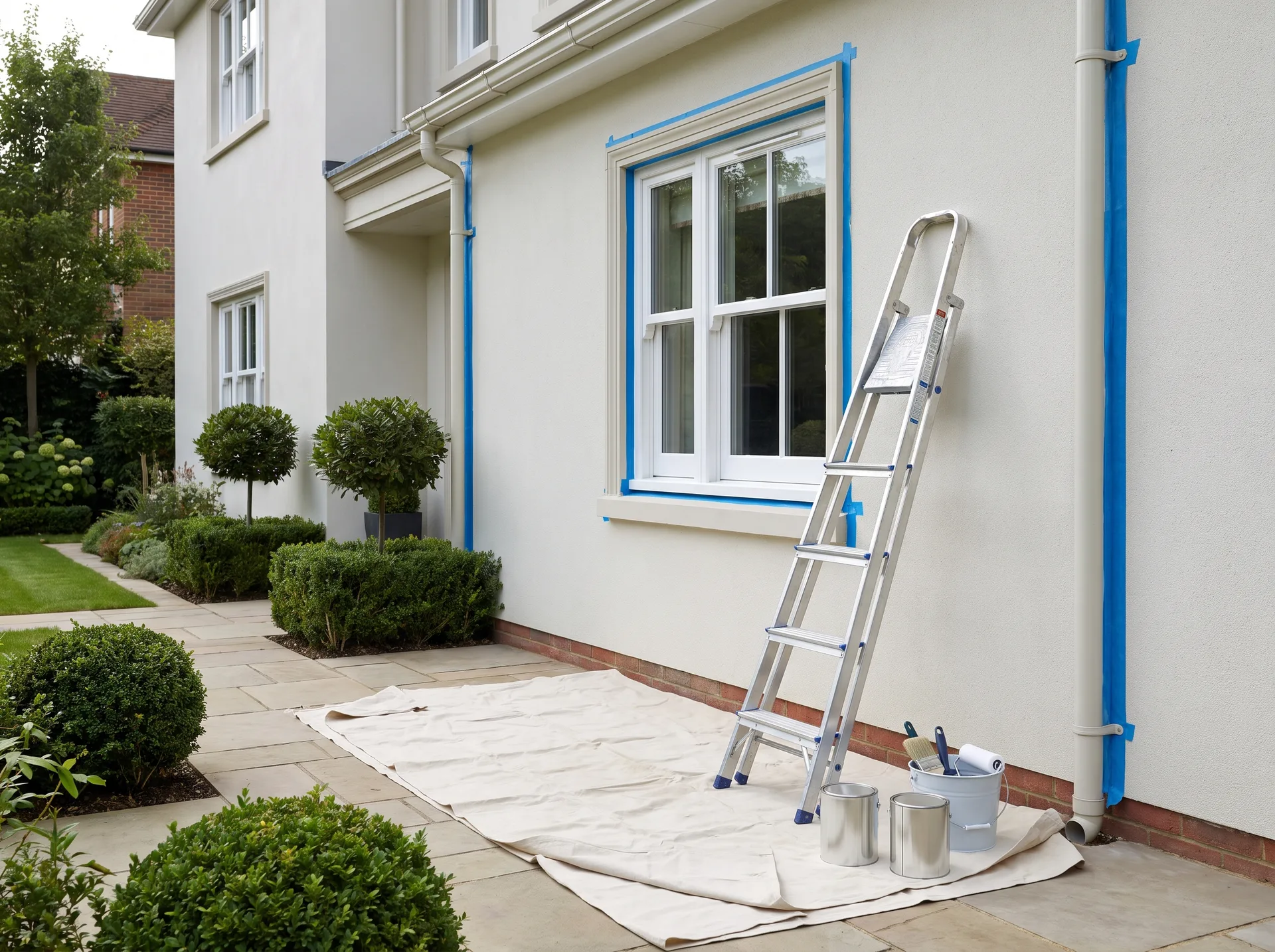
Preparing your home for exterior painting starts well before the first tin is opened. In short, you need to clear access around the property, clean and repair the walls, protect anything that cannot be moved, and wait for a settled, dry spell of weather. Good preparation is what separates a finish that lasts from one that peels within a season.
What to Do Before the Painters Arrive
A little groundwork on your side helps the crew work safely and efficiently. Before the team arrives, walk around the whole building and clear a path around the full perimeter so ladders, towers or scaffolding can be positioned without obstruction.
- Move garden furniture, barbecues, planters and bins away from the walls
- Unlock side gates and garages so access is not delayed
- Secure pets indoors and let children know where work is happening
- Agree colours and finishes in advance so there are no last-minute changes
- Tell your immediate neighbours, especially in terraced or semi-detached rows
Decide early where materials and waste can be stored, ideally on a hard standing that stays dry. If there are outside taps or power points the team may need, point these out on the first day. Clear, step-by-step communication at this stage saves time once work begins and reflects the open approach we value on every project.
It also helps to agree a few practicalities with your painter and decorator before the start date. Ask how many days the work is likely to run, whether access is needed to the rear as well as the front, and how waste will be removed. Knowing the plan lets you arrange parking and keep the household routine around it.
Do You Need Permission Before You Start?
Painting the outside of a house in England usually falls within permitted development rights (General Permitted Development Order, Class C), so most homeowners can repaint without a formal application. However, there are important exceptions you should check first.
If your home is a listed building, or sits within a conservation area or under an Article 4 Direction, formal consent may be required before you change the exterior appearance, including colour. These controls are common across many London streets, so it is worth confirming your property's status before committing to a new shade.
Because the details depend on your specific property and borough, always confirm with your local planning authority or a qualified specialist rather than assuming. Never take it for granted that no permission is needed. A short enquiry early on avoids the risk of having to repaint or reverse work later. If you are unsure whether your street is covered, a brief call to the council will usually confirm it.
Keep any written guidance you receive, as this gives you a clear record of what was agreed. If your frontage adjoins the highway or you share a party wall, mention this too, as it can affect what is permitted.
Do the Walls Need Cleaning or Repairs First?
Yes - clean, sound walls are essential, because paint only bonds well to a stable surface. British walls very commonly carry moss, algae and lichen, which must be removed and treated with a fungicidal wash before painting; if left in place, they cause the new coating to flake away.
Light soiling can often be lifted with gentle brushing, while heavier growth may need more thorough cleaning. Whatever the method, the surface must be fully dry before any paint goes on. Traditional finishes such as smooth render, roughcast and pebbledash should have cracks repaired with a flexible exterior filler first.
Older, weathered surfaces that feel chalky or powdery - common on aged concrete, render and pebbledash exposed to our climate - need a stabilising solution (stabilising primer) to bind the surface before the topcoat. This step is often skipped and is a frequent reason finishes fail early.
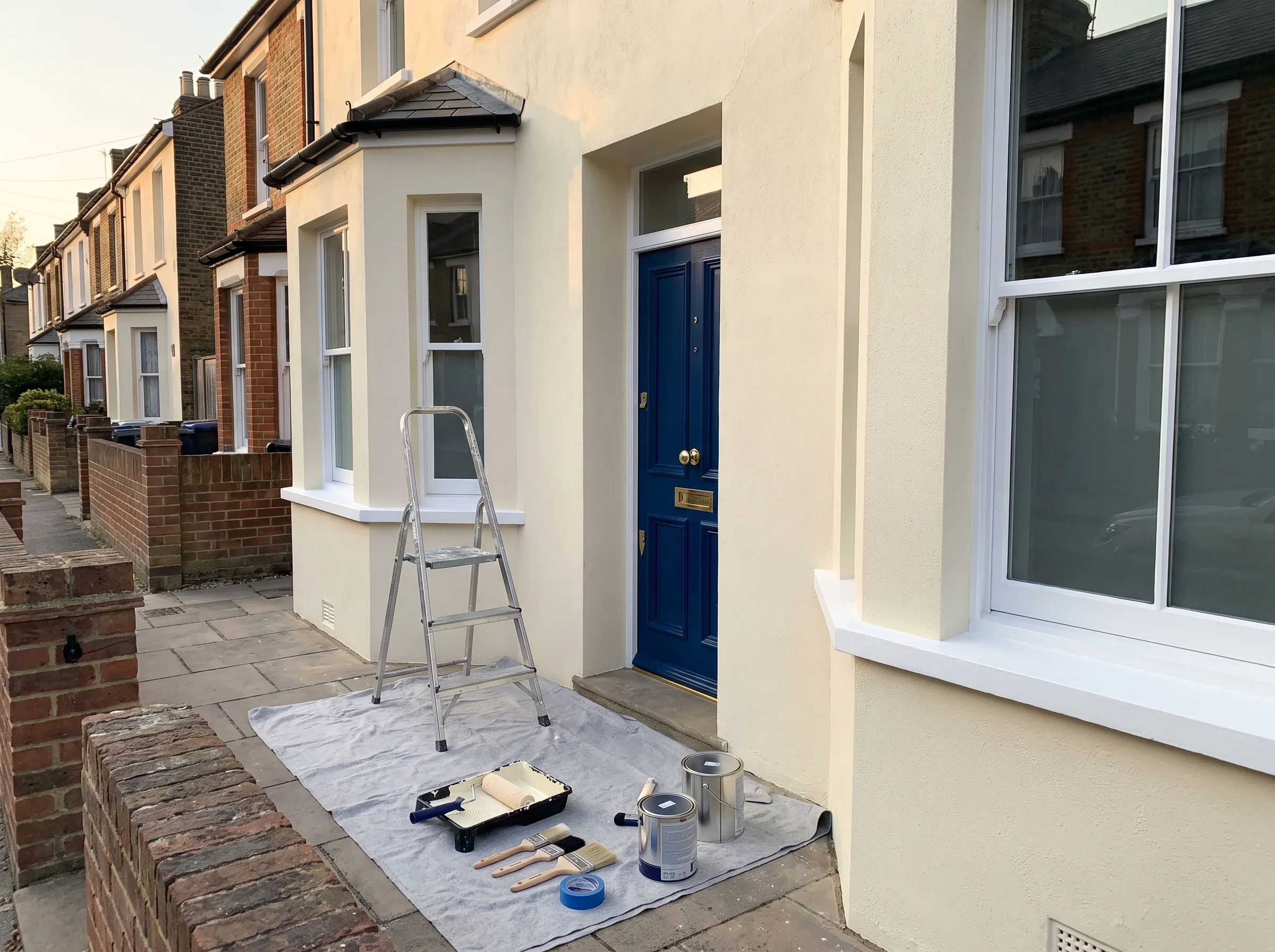
If you are unsure how sound your walls are, our team can assess them as part of our exterior painting service and advise on the right preparation.
Protecting Plants, Driveways and Windows
Protecting the areas around your walls keeps your property tidy and prevents accidental damage. Windows, frames and timberwork should be masked with exterior-grade, UV-resistant tape so lines stay crisp and residue does not bake on in the sun.
Driveways, paths and planting beds are covered with dust sheets or heavy-duty tarpaulins to catch drips and overspray. Shrubs, climbers and anything growing against the walls should be trimmed back far enough to give the crew clear, safe access to the full surface.
Potted plants that can be moved are better relocated to a safe spot for the duration of the job. For planting that cannot be shifted, breathable covers are preferable so foliage is not left sweating under plastic for days. Tie back any loose hoses or cabling that run along the base of the wall. The type of surround matters too: gravel and decking are easier to sheet than soft borders, where tarpaulins can smother plants if left down for long.
Think about drainage too - gratings and gullies should be kept clear so sheets do not block rainwater during a shower. A few minutes spent securing covers properly avoids a far bigger clean-up later.
Getting External Fixtures and Air Bricks Ready
One area that is easily overlooked is the collection of fittings attached to your walls. Before the crew arrives, make an inventory of everything fixed to the exterior so nothing is painted over or disconnected by mistake.
- Security cameras, video doorbells and external alarm boxes
- Facade and porch lighting, plus motion sensors
- Satellite dishes, aerials and broadband or TV cabling
- House numbers, signage and letterboxes
- Outside taps, meter boxes and vent covers
Note which items can be temporarily removed and which must stay in place and be carefully masked. Cables clipped to the wall can often be eased away so the surface behind can be painted neatly, then clipped back afterwards.
The right approach often depends on the type of fitting and how it is mounted. A hard-wired camera or alarm is best left to the installer if it needs disconnecting, while a plug-in doorbell can usually be unclipped and set aside. Make a note of where each item sits so it goes back in exactly the same place.
Air bricks deserve special attention. These small ventilation grilles feed under-floor airflow in many older British homes, and they must never be painted over or sealed shut by protective coverings. Blocking them risks trapping damp beneath suspended floors, so point them out clearly and make sure any masking is removed promptly once that section is finished.
What Weather Conditions Suit Exterior Painting Best?
Weather has a big influence on how well an exterior finish cures. In the UK, the most reliable window runs from late spring to early autumn - roughly late April to early October - when temperatures are steadier, days are longer and there is less risk of rain and overnight dew.
Masonry paint should not be applied to damp surfaces or when it is colder than the minimum allowed, usually a recommended minimum of 8-10°C for both the air and the wall itself. Humidity beyond the manufacturer's guidance also causes problems, as does painting late in the day when dew can wash fresh surfactant from the coating.
North-facing walls and shaded elevations hold moisture longer, so they may need extra drying time even when the rest of the house feels ready. A render wall that stayed wet overnight will not be ready as early as a sheltered, sunnier one, so plan the running order of elevations accordingly.
| Condition | Aim for | Avoid |
|---|---|---|
| Temperature | 8-10°C and above, air and wall | Below the recommended minimum |
| Surface | Fully dry render or masonry | Damp or recently rained-on walls |
| Time of day | Mornings and early afternoon | Late evening, when dew forms |
| Season | Late April to early October | Cold, wet winter spells |
Even in summer, keep an eye on the forecast across the whole job, not just the first morning. A dry run of several days gives each coat time to cure properly between applications.
Access, Scaffolding and Neighbouring Land
Getting safe access to every elevation is part of good preparation, and it sometimes involves more than ladders. Working at height is skilled work, so leave the erection of scaffolding or access towers to competent professionals.
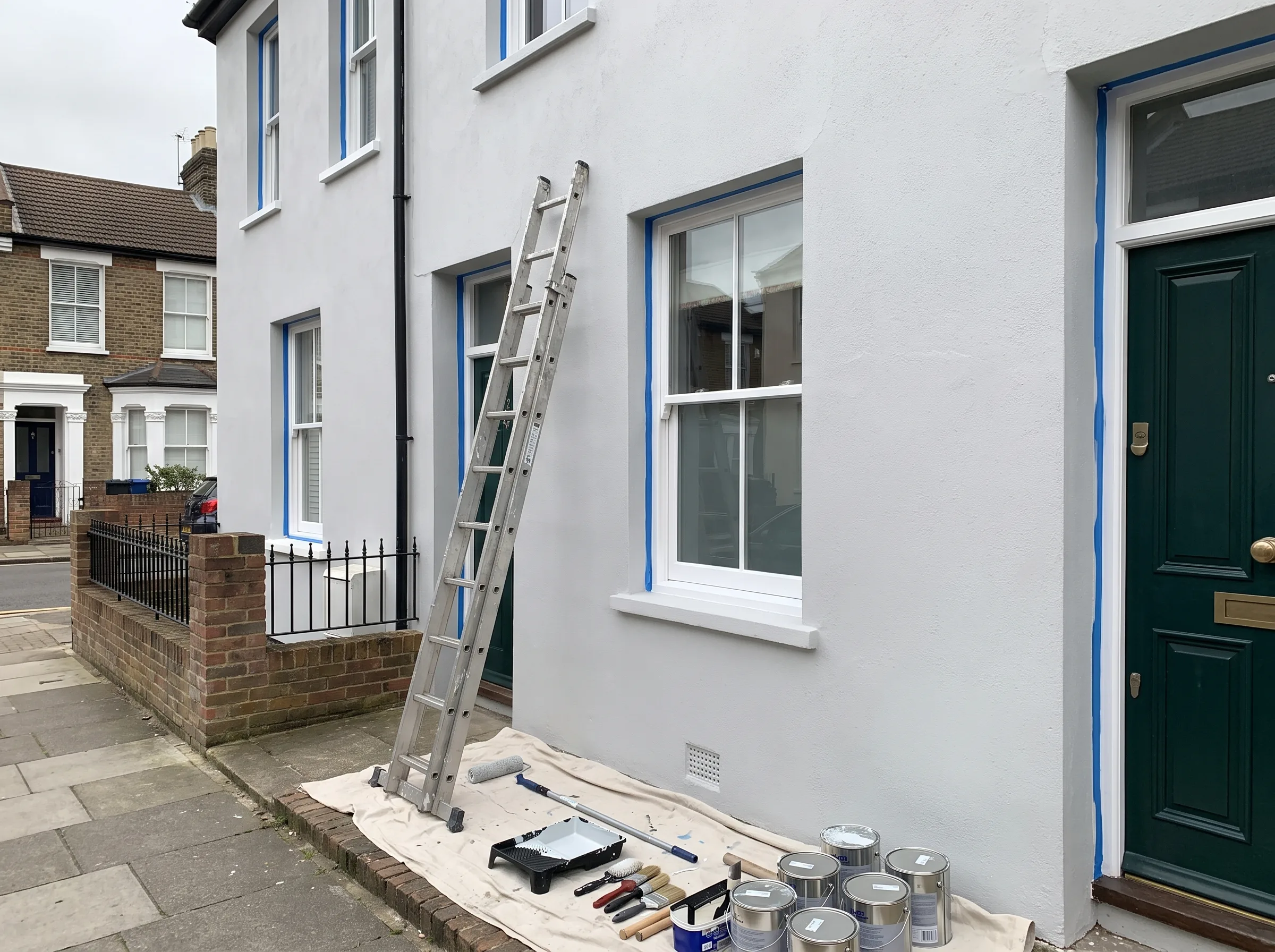
If a scaffold or tower stands entirely within your own property, no highway licence is needed. However, if the structure occupies the pavement, a public road or the highway, the contractor must obtain a licence from the local council or highway authority before it goes up.
For terraced and semi-detached homes, reaching a flank wall or rear elevation can mean standing equipment on a neighbour's land. In England, the Access to Neighbouring Land Act provides a route to request reasonable access for essential works, but it relies on cooperation and, where needed, a formal agreement. Speak to your neighbour early and keep things friendly. A common mistake is leaving these arrangements until the scaffolding is due, which can stall the whole job.
Because rules vary by borough and situation, confirm the details with your council or a qualified specialist before work starts. Clear arrangements over access avoid delays once the preparation is done and the painting is ready to begin.
Bringing Your Preparation Together
Good preparation is the quiet work that makes an exterior finish look sharp and last. Clear the perimeter, check whether your property needs consent, clean and repair the walls, and protect plants, driveways, windows and fittings. Pay attention to air bricks and access, wait for a settled dry spell, and keep talking to your neighbours. If you would like help preparing your home for exterior painting, or want the whole job handled from preparation to final coat, we are happy to advise and discuss what your property needs. Get in touch for a free, no-obligation chat about your project.
FAQ - Frequently asked questions
How long should I leave walls to dry after cleaning?
Walls must be fully dry before any paint is applied, as masonry paint will not bond to a damp surface. Drying time depends on the weather, the wall type and how wet the surface became, so after heavy cleaning it often takes longer than expected. In cooler or humid conditions, allow extra time.
Can I prepare and paint the exterior myself?
Simple tidying, moving furniture and trimming shrubs are straightforward for most homeowners. However, working at height, erecting scaffolding and treating unstable or heavily soiled surfaces are best left to competent professionals for safety and a lasting result.
What happens if rain is forecast during the job?
Fresh coatings need dry conditions to cure, so painting is usually paused if rain or heavy dew is likely. A settled, dry spell across several days is far better than squeezing coats in between showers.
Should flaking old paint be removed before repainting?
Loose, flaking or powdery paint should be removed and the surface stabilised, otherwise the new coating will lift away with it. On chalky older render, a stabilising solution is often needed to bind the surface before the topcoat.